
Description
Hangzhou Ever-Power Sprocket Co., Ltd.
At 1-1/4-inch pitch, the individual tooth loads can exceed 20 kN in heavy-duty applications. A subsurface void in the tooth root section — undetectable by surface inspection — becomes a fatigue crack initiation site under that cyclic load. We test for it before the first cut.
Material Integrity at the #100 Scale: Why Standard Mill Certs Are Not Enough
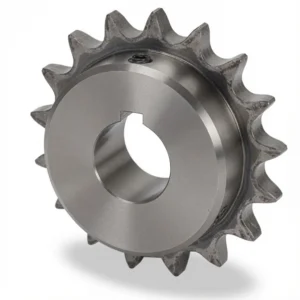
A mill test report (MTR) confirms the chemistry and mechanical properties of a heat of material from tests performed on a sacrificial sample — not on the bar stock that will become your sprocket. For most components, this is an entirely adequate quality assurance level. At the #100 pitch scale, with tooth cross-sections carrying 15–25 kN in service and inspection intervals of 12 months or more, it is not. The risk is subsurface defects: laminations, voids, and pipe defects that originate in the steelmaking and casting process and survive into the finished billet without affecting surface appearance or chemistry. On a small sprocket, a void off the load path is inconsequential. On a 40-tooth #100 SS sprocket driving a continuous casting machine strand guide, a lamination at the wrong location under cyclic tensile load is a fatigue crack waiting to initiate at the worst possible time — during a casting sequence that cannot be interrupted. Our response to this is non-negotiable: every billet over 120 mm diameter used for Ever-Power #100 Stainless Steel Sprockets is individually ultrasonically tested to ASTM A388 Grade D before a single machining pass is taken. Only UT-cleared material proceeds to the machine shop.
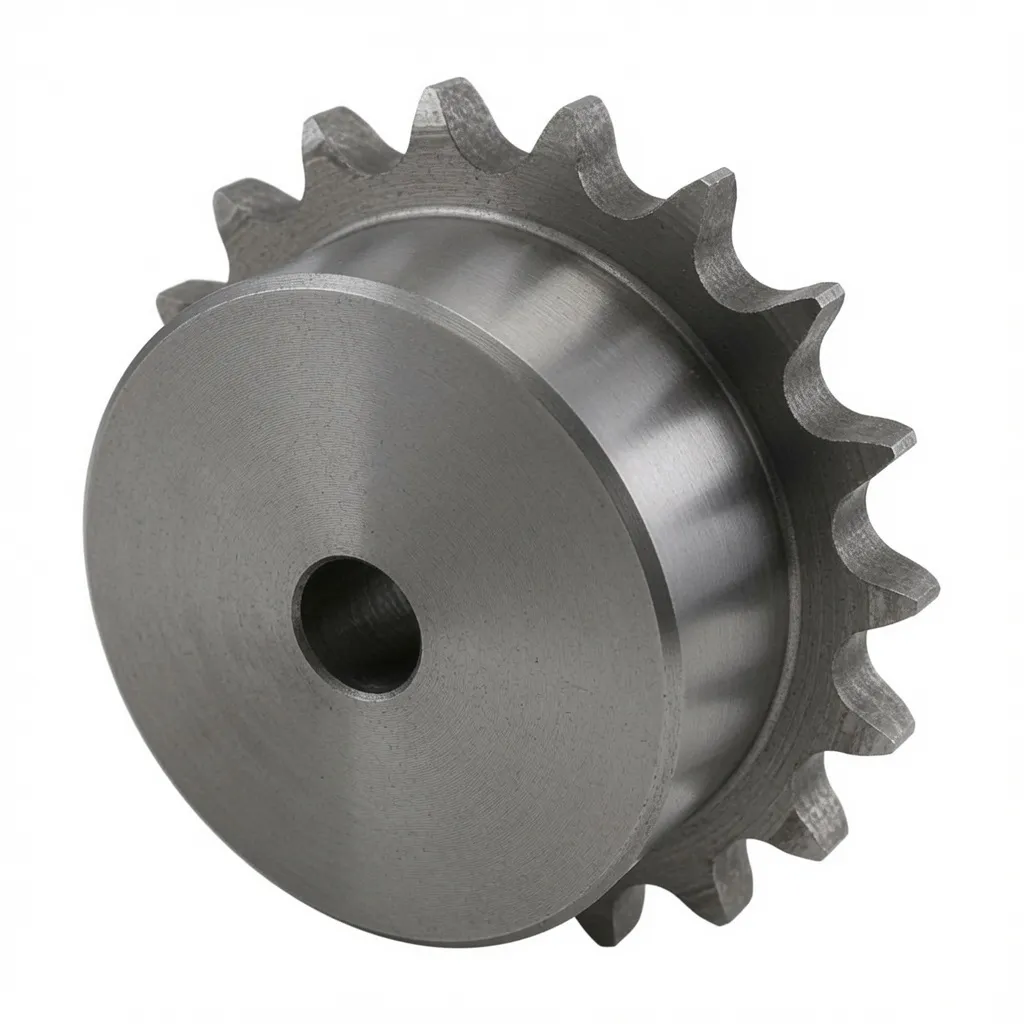
The Full Material Qualification Process
Spécifications techniques
| Paramètre | Valeur |
|---|---|
| Numéro de chaîne | ANSI 100 |
| Pas | 31,75 mm (1-1/4″) |
| Diamètre du rouleau | 19,05 mm |
| Matériel | 316 SS standard (304 SS on request) |
| Billet QC | UT per ASTM A388 Grade D + PMI per item |
| Traitement thermique | Solution anneal 1,050–1,100 °C + water quench |
| Gamme de dents | 8T – 48T (plus grandes tailles sur demande) |
| Documentation | UT clearance + PMI record + MTR + CMM + production traveller |
Solution Annealing: Restoring Maximum Corrosion Resistance After Machining
Heavy machining of stainless steel generates localised heat at cutting interfaces that can precipitate chromium carbides at grain boundaries if the temperature dwell enters the sensitization range. For #100 scale parts where material removal is substantial, we apply solution annealing after rough machining: heating the part to 1,050–1,100 °C and water quenching. This dissolves any carbide precipitates and restores a fully austenitic, homogenous microstructure — which is the condition with maximum corrosion resistance. The treatment is standard on all #100 SS orders and is documented on the production traveller.
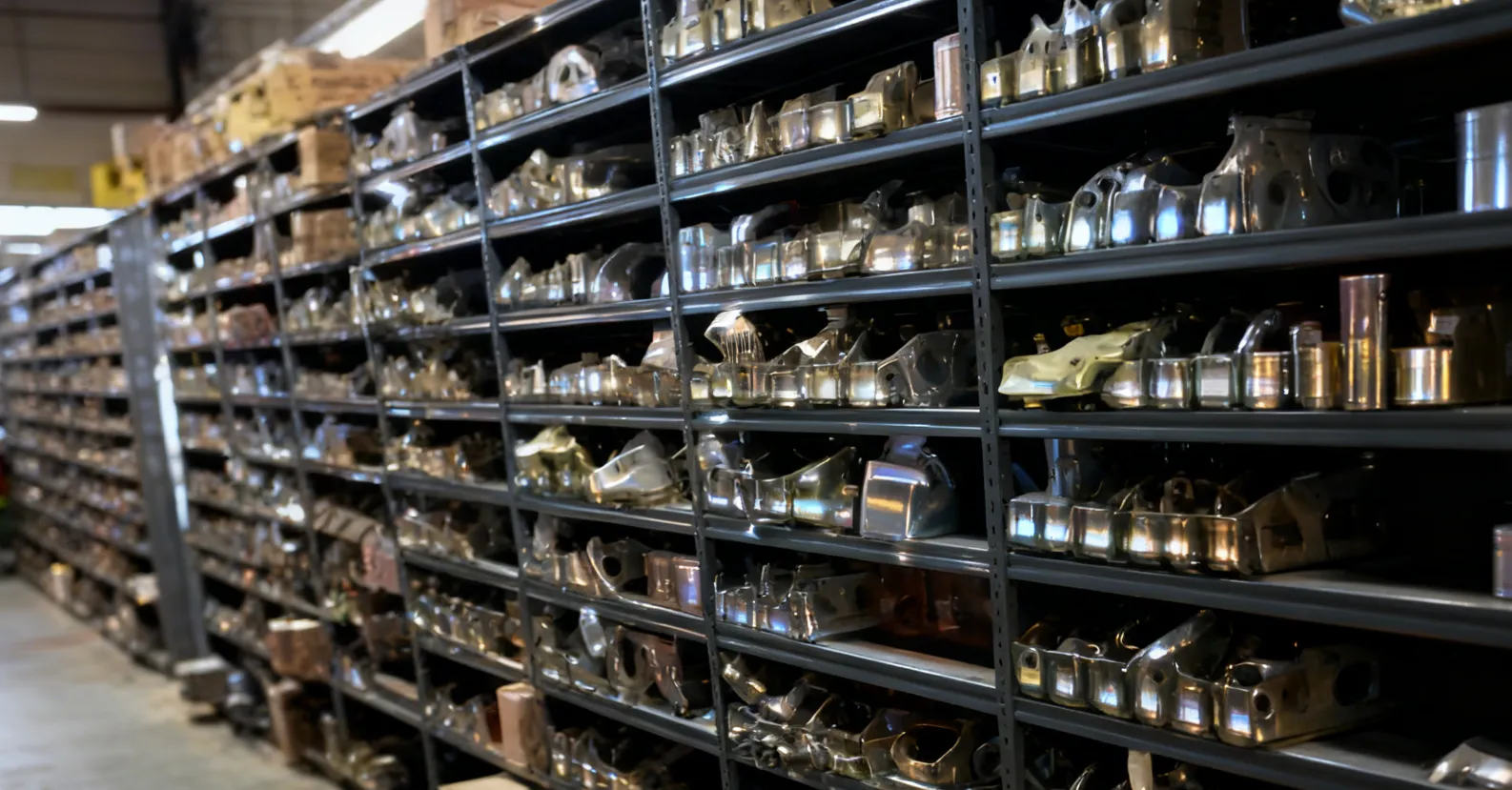
Heavy Drive System Components, Same Specification
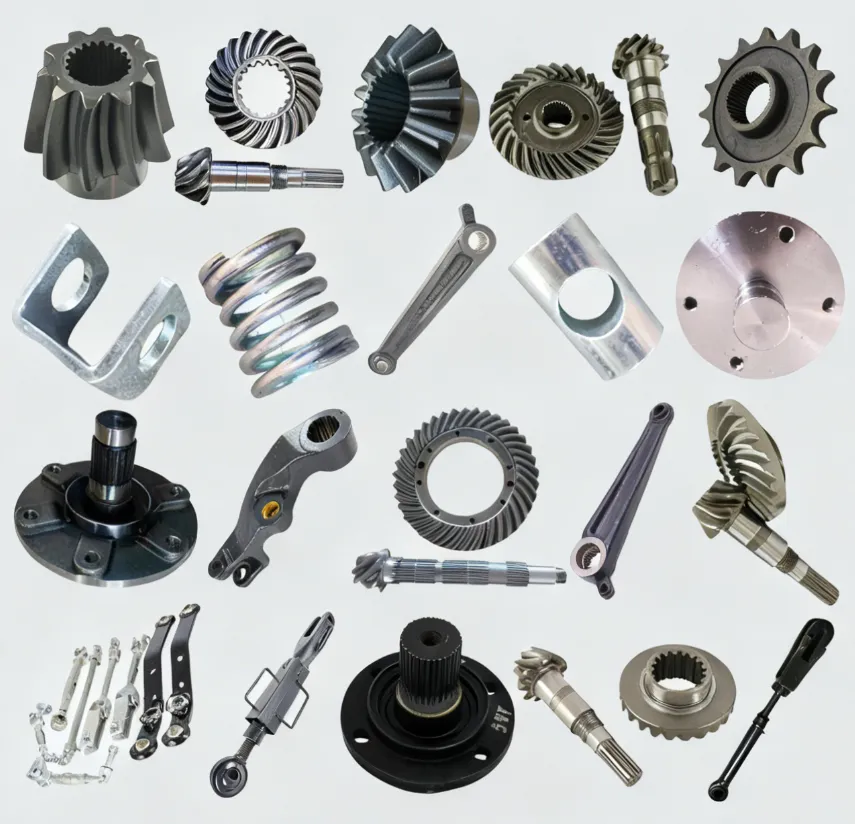
Extend the same material-integrity standard throughout the entire pignon en acier inoxydable drive:
- Chaîne à rouleaux ANSI 100 en acier inoxydable 316 — MTR-documented, matched grade
- Chaîne SS série lourde 100H — for drives at peak single-strand capacity
- Large QD Taper Bushing Sets — SDS 4040–5050, SS versions available
- Complete Drive Kits — matched sprockets + chain + bushings, one documentation package
- Third-Party Inspection — SGS, Bureau Veritas, or Intertek coordinated on request
Avis clients
“Our TÜV inspector reviewed the full documentation package — PMI, UT clearance, MTR, CMM, traveller — and said it was the most complete material traceability package he had seen from any Asian sprocket manufacturer. The qualification audit passed in one session.”
“Offshore mooring tensioner, 18 months direct seawater spray on 316 SS #100 sprockets. Visual and dimensional inspection at dry-dock: zero corrosion, tooth profile within original CMM spec. The UT documentation satisfied our DNV certification requirement.”
“Complex step-hub drawing — reviewed twice before machining, which caught a dimension conflict in our drawing. Delivered on time for the turnaround window. Documentation was comprehensive and well-organised.”
Submit Your Specification — We Review Before Producing
Drawing review included. UT-cleared billet in stock for standard 316 SS sizes.
+86-571-88220653 | [email protected] | SHENHUA ROAD, HANGZHOU, CHINE
Explorez notre full stainless sprocket range ou découvrez notre entreprise sur le Page À propos de nous.


Avis
Il n’y a pas encore d’avis.