
説明
杭州エバーパワースプロケット株式会社
The question every engineer asks at the specifying stage: 304 or 316? For stainless sprockets on washdown lines, the wrong answer means either money wasted on an over-spec or a corrosion failure six weeks into service. This page answers it definitively.
Why the Grade Decision Matters More Than the Brand
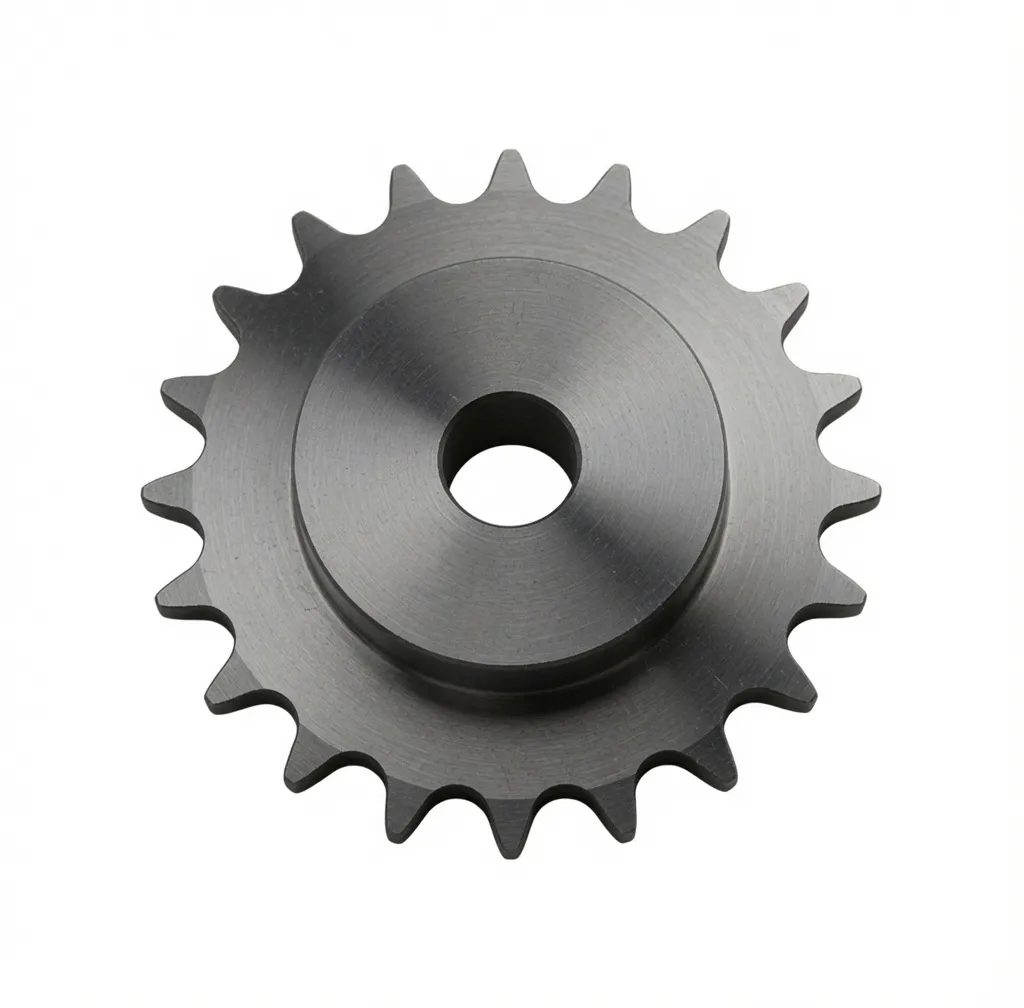
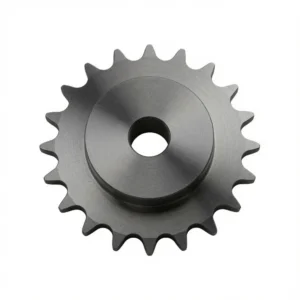
When an engineer selects a stainless steel sprocket for an ANSI 25 chain drive, the dimensional specification is straightforward — ANSI B29.1 tolerances are fixed and every compliant manufacturer hits them. The decision with genuine engineering consequence is the material grade. A 304 SS sprocket installed on a hypochlorite sanitised seafood conveyor will develop chloride pitting within weeks. A 316 SS sprocket specified for a dry bakery drive costs 15–20% more than the 304 equivalent for no performance reason. Getting the grade right — matching chromium-molybdenum chemistry to the actual chemical environment — is the procurement decision that determines whether the Ever-Power ANSI 25 Stainless Steel Sprocket lasts 18 months or 6 weeks on your specific line.
The Grade Decision Framework: Four Questions
Run through these four questions in order. The first ‘yes’ answer determines your grade:
| Question | If YES | If NO |
|---|---|---|
| Does cleaning use hypochlorite (bleach) sanitiser at any concentration? | → 316 SS | Next question |
| Is the product being handled salty, acidic (pH < 4), or briny? | → 316 SS | Next question |
| Is the installation within 2 km of a coastline or in a marine atmosphere? | → 316 SS | Next question |
| Is cleaning limited to alkali detergents (NaOH, caustic) and hot water? | → 304 SS | Call us to discuss |
What the Chemistry Actually Does
Grade 304 SS contains 18% chromium and 8% nickel. The chromium content is what creates the self-repairing passive oxide layer that provides corrosion resistance — and it is sufficient for alkali, steam, and organic-acid environments. The vulnerability of 304 is chloride: at concentrations found in bleach sanitisers, seawater, and some food brines, chloride ions penetrate micro-defects in the passive film and initiate pitting that progresses rapidly under the surface. Grade 316 adds 2–3% molybdenum. Molybdenum stabilises the passive film specifically against chloride attack — it raises the critical pitting temperature by 30–40 °C relative to 304, which in practice means the pitting mechanism that destroys 304 in a hypochlorite environment simply does not initiate on 316 under normal operating conditions.
The Electropolish Option: When Ra ≤ 0.8 µm Matters
Both 304 and 316 grades are available with electropolish finish (Ra ≤ 0.8 µm). Electropolishing removes surface micro-peaks, reduces bacterial adhesion by up to 30% vs. mechanical polish, and simplifies CIP cleaning validation. Specify this finish for GMP pharmaceutical lines and EHEDG-audited food processing equipment where surface roughness is a documented specification requirement.
| パラメータ | 価値 |
|---|---|
| チェーンスタンダード | ANSI 25 (ANSI B29.1) |
| ピッチ | 6.35 mm (1/4インチ) |
| ローラー径 | 3.30 mm |
| 材料 | 304 SS or 316 SS — specify at order |
| 歯の範囲 | 9T~72T |
| 表面仕上げ | Ra ≤ 1.6 µm std; Ra ≤ 0.8 µm EP on request |
| 内径公差 | H7規格 |
| 文書 | MTR + CMM report, standard |

How the Same Sprocket Performs Across Three Environments
To make the grade-selection framework concrete, here is how 304 and 316 SS perform side by side in the three most common ANSI 25 application environments encountered by our customers:
304 SS: ✅ 24+ months, no issues
316 SS: ✅ Same performance, unnecessary cost premium
Verdict: Specify 304
304 SS: ⚠️ 12–18 months, minor pitting risk with hard water
316 SS: ✅ 24+ months, consistently clean
Verdict: Specify 316
304 SS: ❌ Pitting within 8–12 weeks
316 SS: ✅ 18–24 months, no corrosion
Verdict: 316 mandatory
Companion Parts — Grade-Consistent Throughout
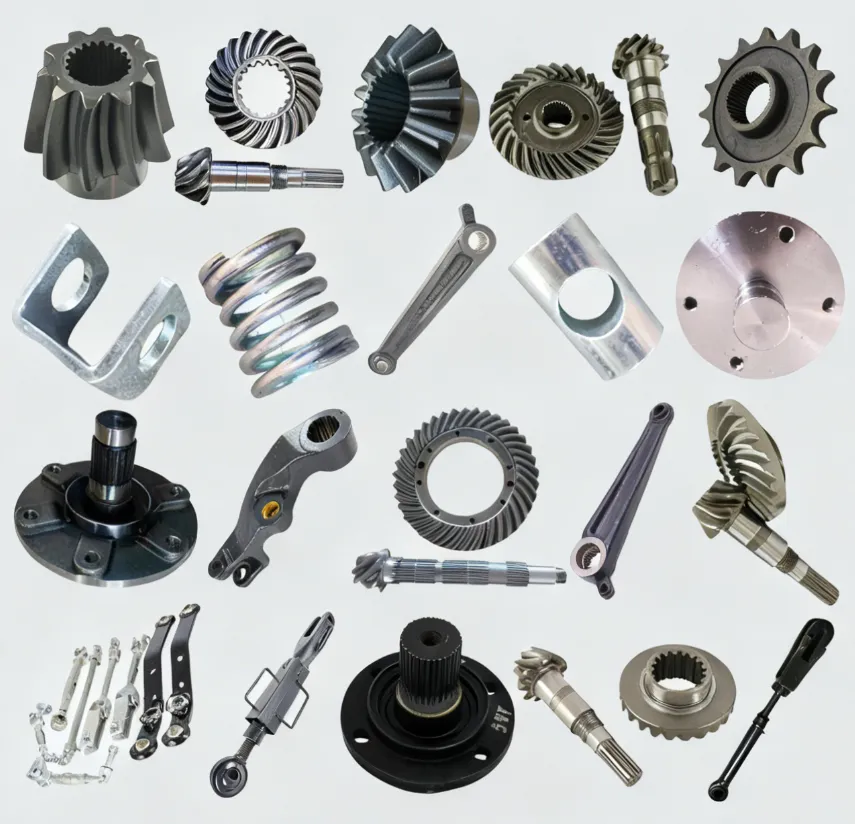
Mixing grades in a wet drive invites galvanic corrosion at the chain-sprocket interface. We supply every component in matched 304 or 316 SS so your ステンレス製スプロケット drive is grade-consistent end to end:
- ANSI 25 SSローラーチェーン — 304 and 316, per-foot or 10 ft lengths
- SS Connecting Links — spring-clip and cottered-pin, matched grade
- SSアイドラースプロケット — plain-bore for tensioning duties
- A2-70 ステンレス鋼ファスナー — set screws and cap bolts, no zinc plating
- VCI Spare Packs — anti-tarnish packaged emergency sprockets for on-site storage
お客様の声
“We specified 304 for our bread-line conveyor after using this page’s grade framework. 22 months later: zero corrosion, no issues. Saved about 18% vs what 316 would have cost on 40 units.”
“316 SS for our shrimp processing line — correct call. Previously 304 units pitted out in 10 weeks in our chlorinated washdown. The Ever-Power 316 units have run two full seasons without any surface change.”
“The MTR confirmed 316 grade. Our HACCP auditor accepted it without further testing. Clean bore, correct keyway. Straightforward supplier.”
Order 304 or 316 — We Quote Both
Send your application details and we’ll confirm the correct grade before production starts.
+86-571-88220653 | [email protected] | 中国杭州市神華路
探索する complete stainless sprocket range または当社について学ぶ 会社概要ページ.


レビュー
レビューはまだありません。