
विवरण
हांग्ज़ौ एवर-पावर स्प्रोकेट कंपनी लिमिटेड
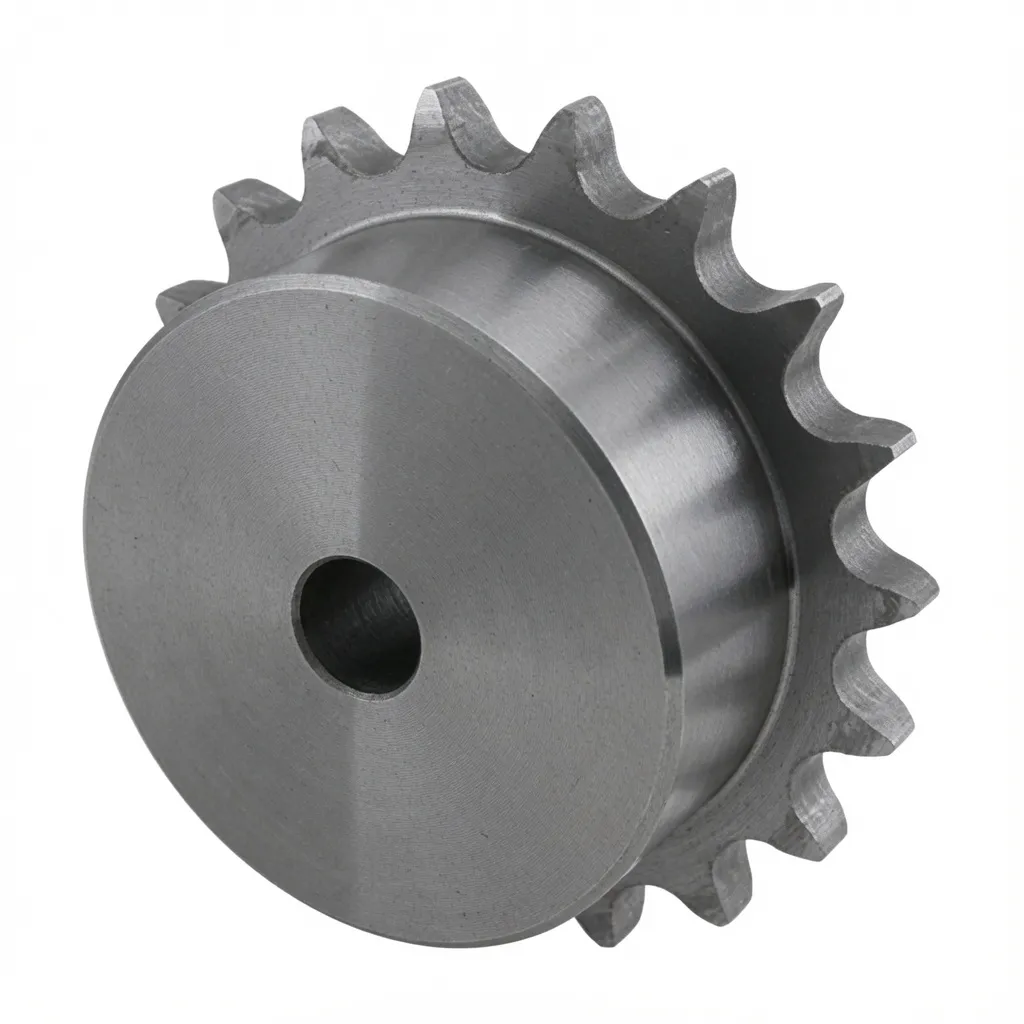
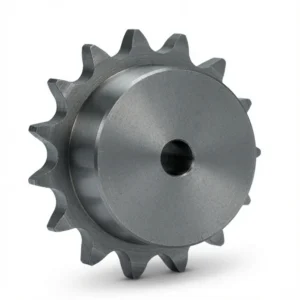
Two failure modes define the #60 stainless sprocket application: corrosion without mechanical load is handled by standard 316 SS. Mechanical load without corrosion is handled by hardened carbon steel. When both occur simultaneously — the induction-hardened 316 SS sprocket is the only component that handles both at once.
The Dual-Failure-Mode Problem: When Corrosion and Load Overlap
Most industrial applications present either a corrosion challenge or a mechanical wear challenge. A bleach-plant conveyor is corrosive but not particularly heavily loaded. A quarry crusher conveyor is heavily loaded but operates in dry air. In these single-variable environments, the specification choice is straightforward. The demanding cases — fish processing, underground mining in acidic groundwater zones, sawmill log conveyors in coastal humidity — present both simultaneously. A 3/4-inch pitch conveyor drive in a salmon processing facility carries substantial product load at moderate speed while exposed to saltwater brine, hypochlorite sanitiser, and fish-acid atmosphere twice a day. Standard annealed 316 SS handles the corrosion excellently. But at the load levels typical of this application, the tooth faces experience roller impact forces that lead to measurable brinelling over 12–18 months. The induction-hardened Ever-Power #60 SS Sprocket (HRC 42–48 tooth face, annealed 316 SS core) addresses both: corrosion resistance from the 316 SS base material, and impact-wear resistance from the surface-hardened tooth profile.
Induction Hardening on Stainless: How the Process Works
Conventional heat treatment of stainless steel — heating the whole part and quenching — creates sensitized grain boundaries susceptible to intergranular corrosion: exactly the problem we are trying to avoid. Induction hardening solves this by using an electromagnetic coil to heat only the tooth face surface layer at very high speed (milliseconds), then quenching that surface locally. The core of the tooth, hub, and disc never reach the sensitization temperature range (425–850 °C) and remain fully annealed. The result:
एचआरसी 42–48 at 1–2 mm depth. Resists roller brinelling under cyclic impact loads. Wear rate reduced by 40–60% vs. annealed SS at equivalent loads.
Remains at original annealed hardness (HRB 85–95). Full ductility retained for shock absorption. No sensitized grain boundaries — corrosion resistance unchanged.
Hard face for wear, tough core for shock, 316 SS chemistry throughout for corrosion. The properties are layered, not traded off against each other.
तकनीकी निर्देश
| पैरामीटर | कीमत |
|---|---|
| चेन नंबर | एएनएसआई 60 |
| आवाज़ का उतार-चढ़ाव | 19.05 मिमी (3/4″) |
| रोलर व्यास | 11.91 मिमी |
| सामग्री | 316 SS (standard) / 304 SS on request |
| IH Tooth Face Hardness | एचआरसी 42–48 (वैकल्पिक प्रेरण सख्त करना) |
| दांतों की सीमा | 8T – 72T |
| अनुपालन | एएनएसआई बी29.1 क्लास ए, आईएसओ 9001:2015 |
When to Specify IH — and When Standard Annealed SS Is Enough
Not every #60 SS application benefits from induction hardening. The added cost is justified when:
- The drive operates under shock or reversing loads (stone crushing, log-feed conveyors, heavy product indexing)
- The chain speed is high enough that dynamic impact forces on tooth faces are significant (above ~1.5 m/s at #60 pitch)
- The maintenance inspection interval is long (annual turnarounds) and mid-cycle tooth failure would be costly
- The स्प्रोकेट replaces a carbon steel unit that was failing from tooth wear rather than corrosion
Specify standard annealed 316 SS for: smooth-running constant-speed conveyors at moderate loads; food processing lines where the primary hazard is corrosion from cleaning chemicals; pharmaceutical applications where surface finish compliance is the key requirement; and enclosed drives with reliable forced lubrication that eliminates the boundary-lubrication wear mechanism.
Drive System Components for Heavy Corrosive Environments
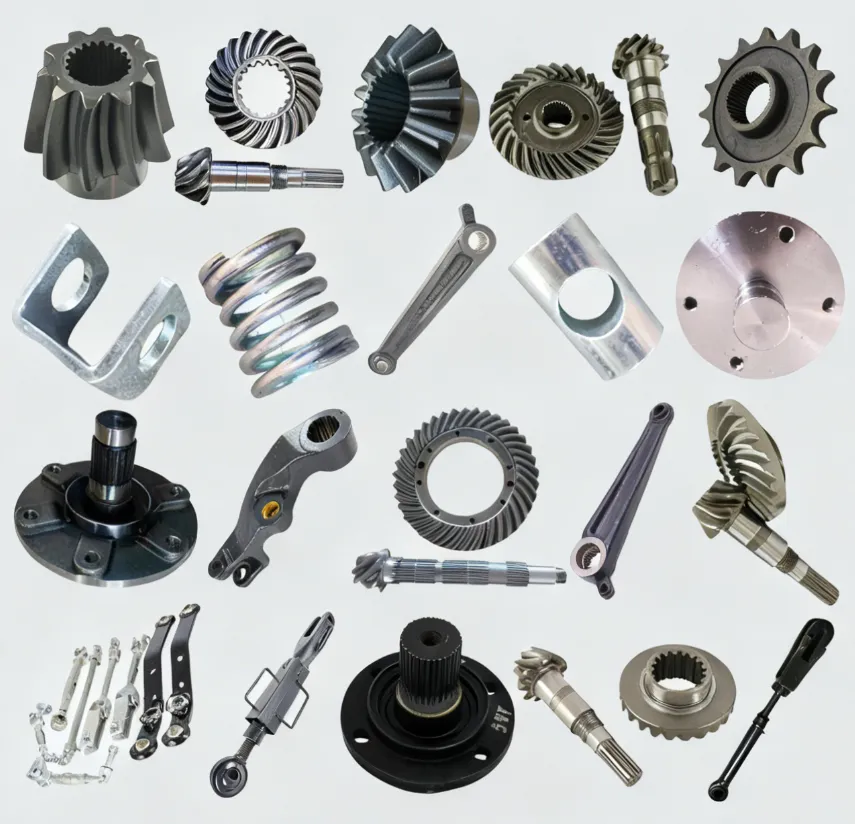
Complete the heavy-duty corrosion-resistant स्टेनलेस स्टील स्प्रोकेट drive system:
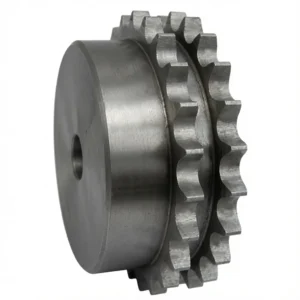
- ANSI 60 316 SS Roller Chain — single and duplex, matched grade
- 60H हेवी सीरीज़ एसएस चेन — thicker plates for shock-load applications
- बड़े बोर वाले क्यूडी टेपर बुशिंग्स — for planned maintenance changeout
- 316 SS Shaft Collars — precise sprocket location on shaft
- Hardness Verification Reports — available on request for IH sprockets (Rockwell C readings per zone)
ग्राहक समीक्षाएँ
“Salmon processing conveyor: IH 316 SS #60 sprockets. 14 months of twice-daily chlorinated washdowns. No corrosion on the body. Tooth wear measured at 12 months: still within ANSI limit. Significantly better than carbon steel IH units we used previously.”
“Underground aggregate conveyor in acid groundwater zone — IH 316 SS #60 sprockets. 16 months in service at annual inspection: tooth profile within tolerance, no acid pitting. The induction hardening was the right call for the load profile.”
“Good quality, hardness report included. Delivery was 14 days — acceptable. We would prefer a shorter lead time for IH configurations as emergency replacements.”
Specify Standard or IH — We Quote Both
Tell us your load, speed, and environment. We’ll recommend the right variant and price both options.
+86-571-88220653 | [email protected]
हमारे बारे में और जानें complete stainless sprocket range या हमारी कंपनी के बारे में और अधिक जानने के लिए हमारे बारे में पृष्ठ.


समीक्षा
अभी तक कोई समीक्षा नहीं।